

When disaster strikes, time becomes the most
critical resource
Disaster in Venezuale
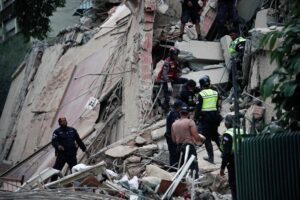
Rescuers search for victims in a collapsed building following an earthquake in Caracas on June 24, 2026. A magnitude 7.1 earthquake struck Venezuela on Wednesday, the United States Geological Survey (USGS) reported, triggering panic in Caracas, according to AFP journalists. The tremor, which was followed by several aftershocks, was also felt in Colombia. (Photo by Manaure Quintero / AFP)
(Pictures from ANSA.it)
Watching what is unfolding in Venezuela right now, it is impossible not to focus on one specific factor that often gets underestimated outside professional circles: time.
Two powerful earthquakes, only seconds apart, have caused widespread infrastructure collapse, overwhelmed local capacity and left entire communities exposed. The immediate reaction is always to look at the numbers — fatalities, injuries, buildings collapsed — but from a disaster management perspective, the real question is different:
How fast can the chain of assistance activate, and how effectively can it sustain itself over time?
Because in events like this, the outcome is not only determined by the magnitude of the earthquake — but by the efficiency of the response in the first hours and days that follow.
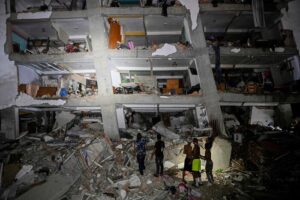
TOPSHOT – People stand in the rubble near a damaged building following an earthquake in Catia La Mar, La Guaira State, some 30kms north-west of Caracas, early on June 25, 2026. Powerful twin earthquakes have killed 32 people and injured more than 700, the nation’s interim president said on June 25, after the massive shocks collapsed entire buildings and sent people running in panic. (Photo by Federico PARRA / AFP)
(Pictures from ANSA.it)
The first layer is always local. Emergency services, hospitals, volunteers — they represent the real front line. But when the scale exceeds national capacity, which seems to be the case here, the system quickly becomes dependent on what we call the international assistance chain.
And that chain is not just about sending help. It is about how help moves.
Search and rescue teams, medical units, logistics support, temporary shelter systems — all of these need to arrive, integrate, and operate in a context where:
- communications may be partially down
- infrastructure (airports, roads, fuel supply) is compromised
- coordination structures are under stress or fragmenting
Even the most advanced teams are only effective if they can be absorbed into a functioning system.
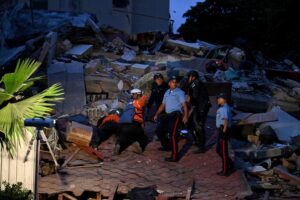
First responders search for victims in a collapsed building following an earthquake in Caracas on June 24, 2026. A magnitude 7.1 earthquake struck Venezuela on Wednesday, the United States Geological Survey (USGS) reported, triggering panic in Caracas, according to AFP journalists. The tremor, which was followed by several aftershocks, was also felt in Colombia. (Photo by Juan BARRETO / AFP)
(Pictures from ANSA.it)
This is where time starts to shape the outcome.
In the first 24–72 hours, the focus is survival — literally pulling people out from collapsed structures. Every hour makes a difference. After that, the nature of the response starts to shift.
The risk is no longer only trauma from collapse, but:
- untreated injuries turning critical
- lack of access to clean water
- displacement and exposure
- disruption of essential services
And this is where the second phase of the assistance chain becomes crucial: sustainment.
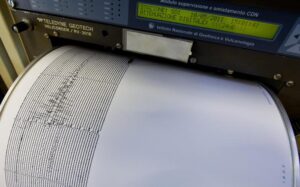
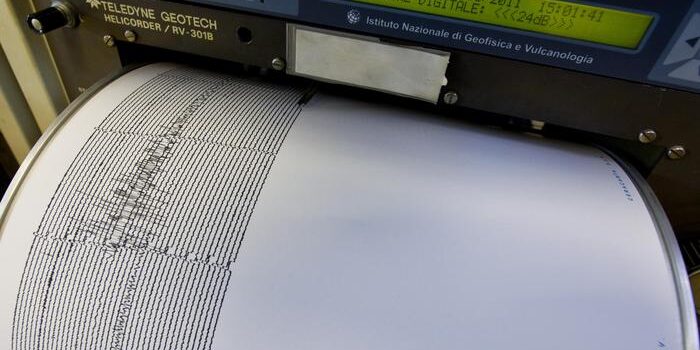
Un vecchio sismografo, ancora in uso, riporta su uno dei tracciati il terremoto che oggi ha colpito le coste dell’Australia di magnitudo 6.9 della scala Richter, nella sala sismica dell’ Istituto Nazionale di Geofisica e Vulcanologia a Roma oggi 10 maggio 2011. ANSA/MASSIMO PERCOSSI
(Pictures from ANSA.it)
What often doesn’t get enough attention is how fragile this transition is.
Getting teams on the ground is only the beginning. Keeping them operational requires:
- stable supply lines
- fuel, medical consumables, equipment rotation
- clear coordination between national authorities and international actors
If any of these elements are delayed, even by a day or two, the impact compounds quickly.
And then there is another factor that disaster managers learn to respect very early: tempo.
Not speed, but tempo.
Because going too fast without coordination creates duplication and chaos.
Going too slow means losing the narrow window where lives can still be saved.
Finding that balance is what defines effective emergency management.
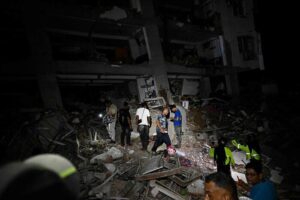
Residents and emergency workers stand in the rubble near damaged buildings following an earthquake in Catia La Mar, La Guaira state, some 30kms north-west of Caracas, early on June 25, 2026. Powerful twin earthquakes have killed 32 people and injured more than 700, the nation’s interim president said on June 25, after the massive shocks collapsed entire buildings and sent people running in panic. (Photo by Federico PARRA / AFP)
(Pictures from ANSA.it)
Looking at Venezuela, the coming days will be critical not only in terms of rescue operations, but in terms of how the wider system stabilises.
The difference between a contained disaster and a prolonged humanitarian crisis will depend on:
- how quickly access routes are restored
- how effectively international support is integrated
- how well coordination holds under pressure
These are not just operational details — they are the mechanisms that determine whether a community can recover or continues to deteriorate.
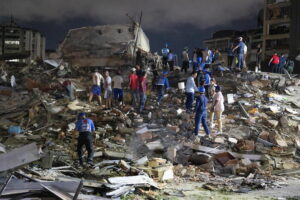
epa13062561 Emergency responders conduct rescue operations in Caracas, Venezuela, 24 June 2026. Two powerful earthquakes struck Venezuela, including a magnitude 7.5 earthquake, causing buildings to collapse as authorities assessed damage and possible casualties, according to the US Geological Survey (USGS) and local officials. EPA/RAYNER PENA
As professionals working in emergency response, healthcare, logistics or public services, this is a strong reminder that resilience is not built during the disaster.
It is revealed.
And what we are seeing is not just the impact of a seismic event, but the result of how systems perform under stress — how quickly they adapt, how well they connect, and how effectively they manage time.
Because in the end, in disaster response, time is not just a factor.
It is the difference between collapse and containment.
by Manuel Carta