
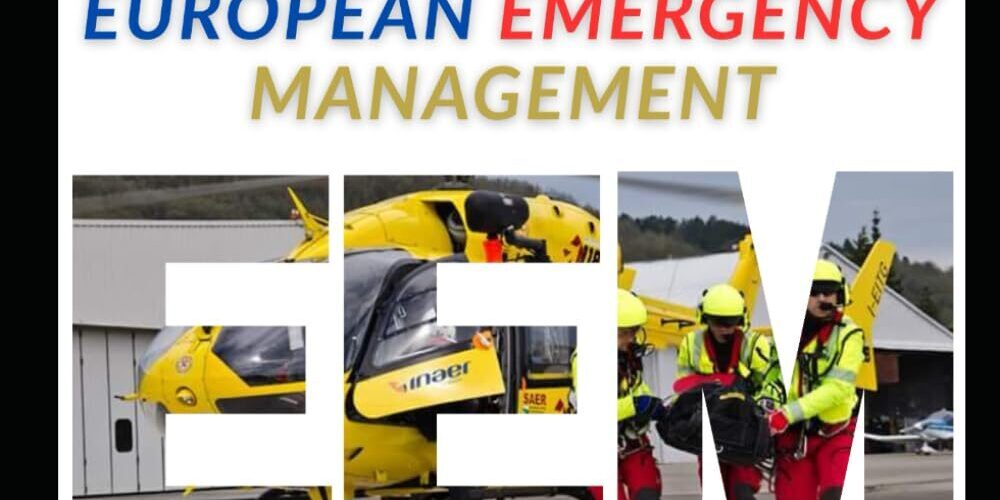
European Emergency Management: A Comparative Journey through Resilience
By Manuel Carta
President of the Esculapiani Association, Specialist in Security and Disaster Management
Introduction
The complexity of modern crises—from climate-driven disasters to large-scale industrial accidents—requires a deep understanding of how different nations coordinate their response. In my latest book, “European Emergency Management”, I explore the diverse operational architectures of key European players, highlighting how local culture and geography shape their rescue departments.

The European Mosaic: How Nations Respond
While the EU Civil Protection Mechanism provides a supranational framework, the “boots on the ground” vary significantly:
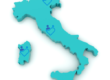
- Italy: Centered on the Dipartimento della Protezione Civile, Italy excels in volunteer integration and the combined use of the Vigili del Fuoco (Firefighters) and medical teams like the 118 Service.
- Germany: A highly decentralized system where the Federal Office of Civil Protection and Disaster Assistance (BBK) coordinates, but the heavy lifting is done by the Technisches Hilfswerk (THW)—a unique, predominantly volunteer-based civil protection organization.
- France: Known for its military-civilian hybrid approach. The Sapeurs-Pompiers (Firefighters) are the backbone, with elite units like the Brigade des Sapeurs-Pompiers de Paris (BSPP) having military status.
- Spain: Managed via the Directorate General for Civil Protection and Emergencies (DGPCE), with a critical role played by the Unidad Militar de Emergencias (UME) during large-scale catastrophes.
- United Kingdom: Relies on “Local Resilience Forums” and the blue-light services (Police, Fire, and Ambulance), with the Maritime and Coastguard Agency playing a vital role in its island geography.
- Finland: A global leader in “Comprehensive Security,” where every department, from the Border Guard to social services, is trained for rapid transition into crisis mode.
 The Departments Behind the Shield
Beyond the firefighters, the book delves into the specialized units that are often the “unsung heroes” of disaster management:
-
- CBRN Units: Specialized in Chemical, Biological, Radiological, and Nuclear threats.
- USAR Teams (Urban Search and Rescue): The experts in structural collapses.
- HEMS (Helicopter Emergency Medical Services): Vital for rapid response in the rugged terrains of Italy or the vast forests of Finland.
Conclusion
Understanding these systems is not just an academic exercise; it is about building a safer Europe. By sharing the best practices found in “European Emergency Management,” we can foster better interoperability when the next crisis crosses borders.
Italian Version
You can find this book in Amazon
in English version: https://amzn.eu/d/03pRgBhu
Or in Italian version: https://amzn.eu/d/04PusW7m