
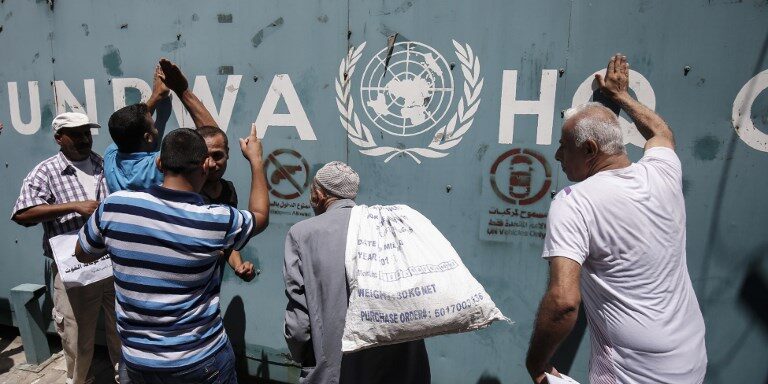
UN organizations help millions of people every day thanks to funding from major economic powers. Cutting funds deliberately creates a war without weapons.
In this historical moment, marked by escalating geopolitical tensions and an increasingly polarized media narrative, we risk losing sight of the humanitarian crises silently unfolding in the most remote corners of the world. In places where information barely reaches—or arrives distorted, fragmented, or entirely absent—millions of people continue to struggle daily against hunger, thirst, and disease, largely unnoticed by the global community.
Since March 2025, the Trump administration has officially suspended a significant portion of funding for international humanitarian organizations. The cuts have severely impacted key agencies such as the World Food Programme, FAO, and Save the Children. In 2024 alone, the United States had contributed approximately $7 billion to food assistance and sustainable development programs. These funds, now withdrawn, accounted for up to 40% of some agencies’ operational budgets.
According to an official statement released by Save the Children in March 2025, more than 320 programs have been reduced or shut down, depriving millions of children of access to essential services such as nutrition, healthcare, education, and protection. The World Food Programme announced that it had to halve food rations in several regions of sub-Saharan Africa and the Middle East, leaving over 8 million people at immediate risk of acute malnutrition.
What is the value of a child’s life? And of millions of children’s lives?
Those of us living in privileged contexts often forget that our stability is largely a matter of chance. Being born on the “right” side of the world is not a merit—it’s luck. But those born elsewhere are no less deserving. These victims of political decisions are not “indirect”—they are deliberately overlooked.
It is time for Europe and its allies to step forward and take the lead. A coordinated, long-term response is needed: structural funding, well-building projects, widespread medical supply distribution, and programs for agricultural self-sufficiency. We must design a new strategy for international cooperation—one that looks beyond the spotlight of visible crises and acts where no one is watching.
We have a moral—and strategic—duty to act.
Because one day, in an increasingly unstable world, we might find ourselves in need of help. And then we’ll ask ourselves: will others turn away from us with the same indifference we show today to those silently suffering?
#ManuelCarta #UNITEDNATIONS #savethecildren #mctraining #esculapiani
Manuel Carta
United Nations Association of Northern Ireland – Board of Directors Member
World Food Programme ONU Instructor
MC Training – Head Manager
Esculapiani Association – President