
Forensic Entomology: Unveiling the Secrets of Crime Scenes through Insects
written by Mariagiovanna Pais
In the world of forensic science, where investigators often rely on physical evidence like fingerprints, DNA, and bloodstains, forensic entomology offers a unique, often overlooked perspective. This fascinating field uses insects and their life cycles to help solve crimes, particularly homicides. By studying the insects found on a corpse, forensic entomologists can determine the time of death, reconstruct the sequence of events after death, and even uncover evidence of whether a body has been moved.
Forensic entomology bridges the gap between biology and criminal investigations, providing critical information that can help bring justice to victims and their families. In this article, we will explore the fundamentals of forensic entomology, how it is applied in crime scene investigations, and the profound impact it can have on solving cases.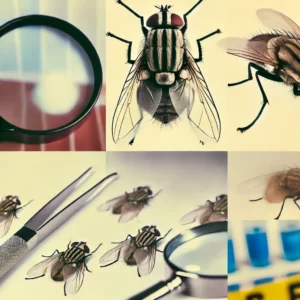
The Role of Insects in Forensic Investigations
Insects are among the first organisms to colonize a body after death, making them reliable indicators of the post-mortem interval (PMI)—the time that has passed since death. Different species of insects are attracted to different stages of decomposition, and by identifying the species present and their developmental stages, forensic entomologists can estimate the time frame in which death occurred.
The most commonly studied insects in forensic entomology are blowflies (Calliphoridae) and flesh flies (Sarcophagidae), which are often the first to lay eggs on a body. These eggs hatch into larvae (maggots) that feed on the decaying tissue, and their development follows a predictable timeline depending on environmental factors such as temperature and humidity.
For example:
- Blowflies usually arrive within minutes to hours after death, attracted by the scent of decomposing flesh. By examining the stage of the blowfly larvae (whether they are in their early or late stages of development), entomologists can provide a rough estimate of how long a body has been decomposing.
- Beetles (such as carrion beetles) tend to arrive later in the decomposition process, often after the soft tissues have been consumed. The presence of beetles indicates that the body has been exposed for a longer period.
How Forensic Entomology Works in Practice
- Collection of Insect Evidence: At the crime scene, forensic entomologists collect insects from the body and the surrounding environment. This includes both live insects and pupal casings (the remains of insects that have completed their life cycle). Proper collection is crucial, as contamination or improper handling can skew the results.
- Identification and Analysis: Back in the lab, the collected insects are identified to species level. The life cycle stage of each insect (egg, larva, pupa, adult) is determined, and environmental data such as ambient temperature is considered. This information allows forensic entomologists to estimate the PMI based on the insects’ development.
- Calculation of Post-Mortem Interval: Using known developmental timelines for specific insect species and factoring in environmental conditions, forensic entomologists estimate the time of death. For instance, if blowfly maggots are found in their second instar stage, the body has likely been dead for approximately 24 to 48 hours, depending on the temperature.
Beyond Time of Death: Other Applications of Forensic Entomology
While determining the post-mortem interval is one of the primary uses of forensic entomology, insects can also provide other critical clues in criminal investigations.
- Body Relocation: Insects can reveal whether a body has been moved after death. Different environments attract different insect species, so if a body is found in a location where the insect population does not match the stage of decomposition, it may indicate that the body was relocated after death. For example, if insects native to a forest are found on a body discovered in an urban area, it suggests the body was moved.
- Evidence of Trauma or Abuse: Insects can sometimes indicate the presence of wounds or trauma that may not be immediately visible to investigators. For instance, blowflies are attracted to open wounds, so clusters of eggs or larvae in specific areas of the body could suggest trauma occurred before death.
- Toxicology: Insects feeding on a corpse can accumulate toxins or drugs that were present in the body at the time of death. Forensic entomologists can analyze the insects for traces of drugs, poisons, or alcohol, which can be especially useful in cases where the body is too decomposed for traditional toxicological tests.
Famous Cases Solved with Forensic Entomology
Forensic entomology has been instrumental in solving a number of high-profile cases. One well-known example is the case of Joseph Mengele, the infamous Nazi war criminal. After years of searching, a skeleton was found in Brazil in 1985. Entomologists were brought in to examine the insects found on the body, and their analysis helped confirm the time of death, supporting the identification of the remains as Mengele.
In another case, in Canada, forensic entomologists helped determine that a victim’s body had been moved several times post-mortem by analyzing the insect species present at various locations where the body was found. This evidence helped reconstruct the timeline of events and contributed to the conviction of the perpetrator.
Challenges and Limitations
While forensic entomology is a powerful tool, it is not without its challenges. The accuracy of insect-based PMI estimates can be affected by several factors, including weather conditions, the presence of drugs or chemicals in the body, and whether the body was buried or otherwise concealed. Insects are also highly sensitive to environmental conditions, meaning that extreme heat, cold, or moisture can alter their behavior and development rates.
Additionally, forensic entomology requires specialized knowledge and training, as misidentifying insects or failing to account for environmental factors can lead to incorrect conclusions.
Conclusion
Forensic entomology offers a unique and powerful perspective on solving crimes by using insects to unravel the mysteries surrounding death. From estimating the time of death to revealing whether a body has been moved or poisoned, forensic entomologists play a crucial role in many criminal investigations. As research and techniques in this field continue to evolve, the value of forensic entomology in solving crimes is only expected to grow, shedding light on cases where traditional forensic methods may fall short.
In the often dark and difficult world of forensic investigations, these small, seemingly insignificant creatures play a vital role in uncovering the truth, demonstrating once again that sometimes, the smallest details can make the biggest difference.